
Industrial dryers are very different from the dryers that most people know. Industrial dryers are mainly used in mineral processing, construction, metallurgy, chemical and other industries.
The industrial dryer machine has a wide range of applications and can be used to dry more than 100 kinds of materials such as coal slime, limestone, river sand, and clay. It has the advantages of strong heat transfer and high drying efficiency. Industrial dryers are used in sand and gravel yard, mining, coal mining, concrete mixing station, dry mortar, power plant desulfurization, refractory materials, building materials and other industries.
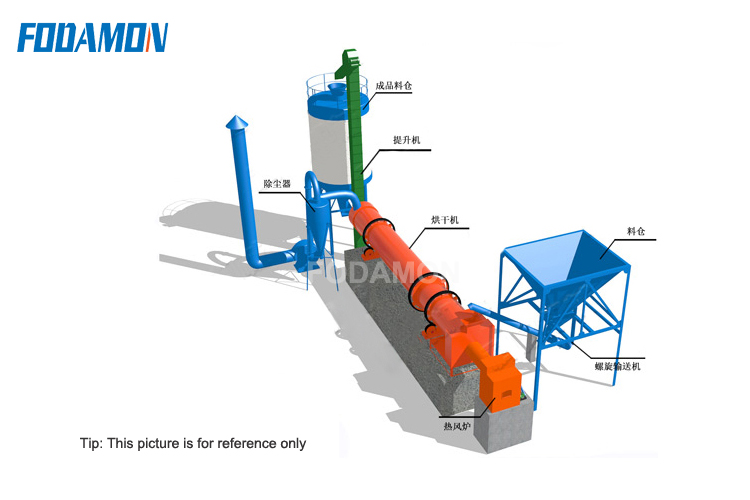
Industrial Dryer Performance Advantages
- Fast heat transfer speed and wide drying area.
- Reasonable parameter design and low energy consumption.
- Energy saving, high efficiency and high application value.
Industrial Dryer Installation
When installing industrial dryer equipment, it is necessary to check the place to be installed and the spare equipment to be installed, so that there will be no other problems during installation, and future use will not be caused by mistakes in initial installation. Inconvenient maintenance and so on. The installation is mainly to check the quality of the foundation concrete pouring and the deviation of the size and position.
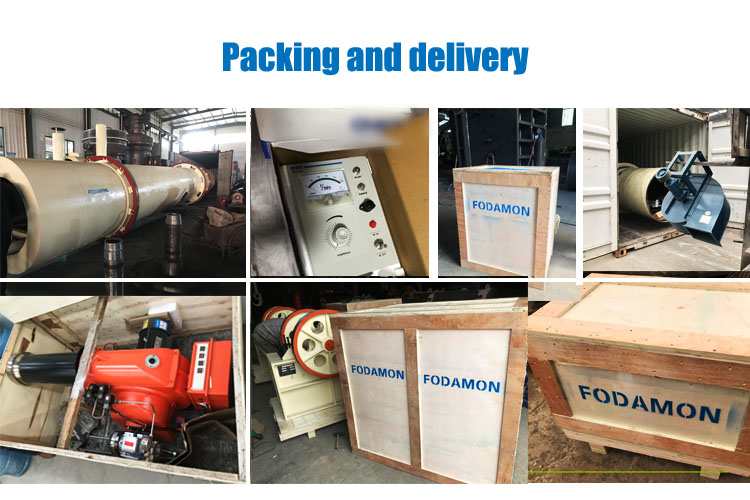
For the basic size and position deviation, the following requirements should be met: the external dimension and the basic coordinate position, the vertical and horizontal axis error is less than 20mm. The elevation error of different planes is less than 20mm, only negative and positive are allowed; the overall length of the slope error is less than 20mm, and the discharge end is allowed Correctness is not allowed; the unevenness of the upper plane is less than 5mm/m, and the overall length is less than 10mm. Check the equipment and check the packing list of the equipment, check the parts, components, standard parts, random documents, etc., and check whether there are any wrong or missing parts, Deformation damage, etc., and record them for purchase or preparation prior to installation.
Pre-test and pre-assemble components and key fittings to avoid rework during installation and ensure installation progress and installation quality.